
OCP (Oregon Catholic Press)
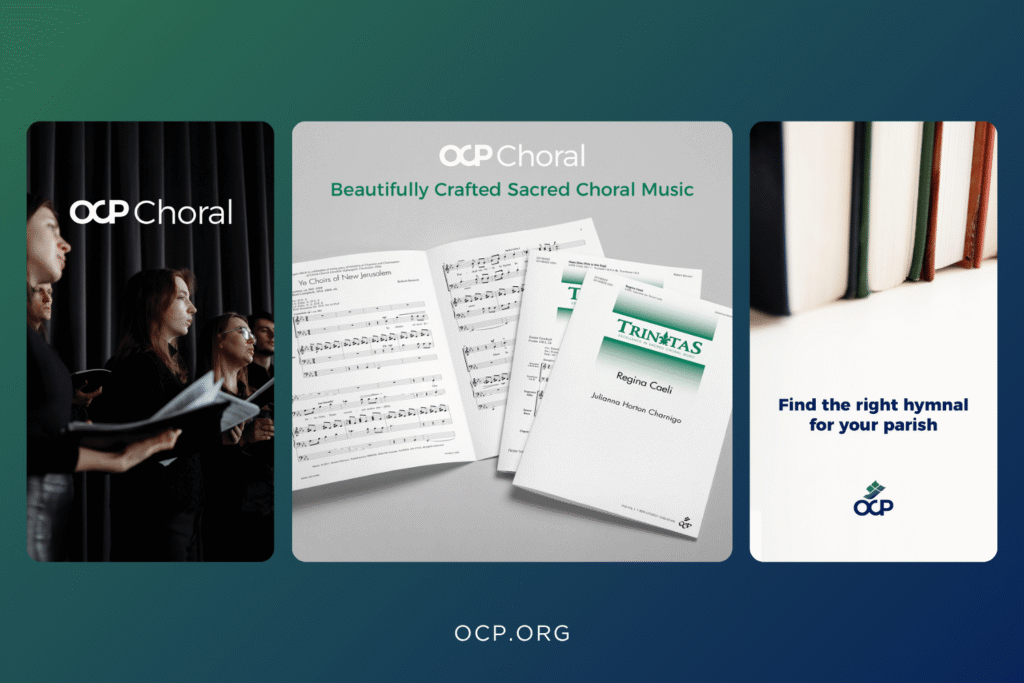
OCP needed a paid advertising partner to audit four brands, fix broken tracking, and build campaigns that drove real purchases and qualified license requests instead of vanity metrics.
The Challenge.
Almost none of those conversions were actual purchases.
Tracking was broken, duplicated, or measuring the wrong things entirely. One campaign was targeting every country on Earth. The algorithm had been optimizing toward fiction.
Our Role.
We restructured campaigns, fixed location targeting, switched bid strategies, and cut every keyword bleeding money with nothing to show for it.
Then we launched and managed ongoing campaigns across both platforms with weekly optimization and reporting.
The Results.
In February that meant $35,815 in tracked revenue on $2,818 of spend: 1,080 purchases, a 17.58% conversion rate, 1271% ROAS on Google, plus 302 Meta purchases on $479 of spend at a $2.32 CPM.
By the March report: $28,839 in revenue on $2,620 of spend, 1,222 purchases, a 20% conversion rate, 1100% ROAS on Google, and 646 Meta purchases on $915 of spend at a $1.97 CPM.
Those are ecommerce numbers. Music Publishing runs on license requests instead of purchases, so once the tracking told the truth, real purchases on the store counted alongside real, qualified license requests on the publishing side. OCP Worship and Music Publishing joined the account in April, the second of two engagements that ran across the first half of 2026.
The dashboards are less exciting now. They're also not fiction.

The Audit
We started where we always start: the data.
OCP had four brands running paid ads across five websites: OCP.org, OCPChoral.com, OCPWorship.com, OCPMusicPub.com, and EchoHarborMusic.com. They hold 70% saturation in Catholic churches with their Breaking Bread hymnal. Their audience is music directors, choir directors, and anyone involved with liturgy planning. SEO was already their key traffic driver. Paid ads were supposed to supplement that.
The dashboards said everything was working. They were wrong.
Google Ads: 10,001 Conversions That Weren’t
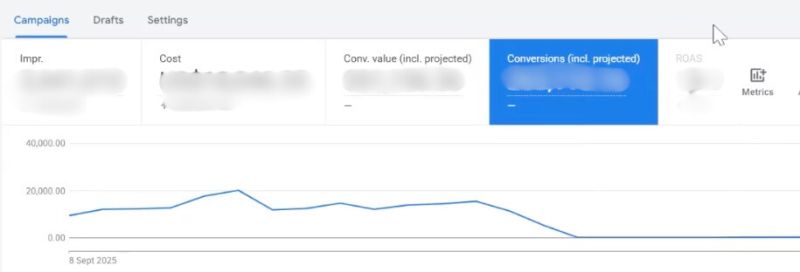
The main ecommerce account was reporting over 10,000 conversions per month. Add-to-cart and begin-checkout were set as primary conversion actions. Google was optimizing for people who browsed, not people who bought. The numbers looked impressive on paper. They didn’t translate to revenue.
We fixed the tracking. Switched bidding from Maximize Conversions to Maximize Conversion Value. Cut every keyword that had spent $66 and $133 with zero actual sales.
1,400 Conversions. Real Number: 70.
OCP Music Publishing had a conversion set up to track page visits to their licensing page. That same conversion was duplicated, so it counted twice. The average visitor viewed that page about 10 times per session.
Doubled by duplicate tracking. Then multiplied by 10 from page reloads. 1,400 divided by 20 equals 70.
The algorithm had been optimizing toward a number that didn’t exist. For months. And spending real money doing it.
We rebuilt the whole setup. One form submission trigger that only fires on actual submissions. One count per person. Real data feeding the algorithm for the first time.
After the Rebuild
Once tracking told the truth, clicks on the Music Publishing side got cheap: $0.15 to $0.32 on average across May and June. The data also told us something we didn’t love. In June, 132 ad driven visitors reached the licensing page and zero of them filled out the form. That pointed at the page, not the ads: the recommendation was to add the same form to that URL, since something between the click and the form was losing every single visitor.
We also assigned real dollar values to each conversion action that same month, so Google could bid toward what’s actually worth more to the business. A license request outranks a video play. By the final report, Google was already prioritizing the conversions that mattered.
Targeting Every Country on Earth
One campaign was targeting every country on the planet. Every single one. The client sells music licenses in the United States.
Their other campaign had it narrowed to the US and Canada. Better. But it was set to show ads to anyone Google considers “interested in” those countries. Someone in New Zealand researching a trip to Cleveland could get served an ad for church music licensing.
Two campaigns. Two location settings. Both wrong.
We narrowed the targeting to the US only and flipped the setting from “interested in” to “presence in.” Five minutes of work. Months of wasted budget.
The Lent Campaign
Most ad platforms don’t know what a missal is, let alone when Lent starts. We built a campaign that runs on the liturgical calendar instead of the regular one, live for roughly 40 to 50 days around Lent and Easter, then shut off.
On Google, the top keyword in that window spent $375 and returned $4 for every $1, a 400% return. On Meta, the Missals ad set got paused two weeks before Easter, on purpose, because a missal that arrives after Easter helps nobody.
The recommendation going into next year: repurpose the campaign shell instead of deleting it, since a full season of real data lives inside it. Media planning that knows what season it is.
OCP Worship: Starting From Zero
OCP Worship had no Google Tag Manager container on the site. No Google Ads tag. No conversion tracking whatsoever. The single Search campaign running was targeting all countries, globally. All broad match keywords. No negative keywords at the campaign, list, or account level. $40/day going to anyone, anywhere, for anything.
Meta Ads
Meta was in better shape than Google. The Conversions API and Pixel were set up correctly. Campaign structure and settings were mostly in line with best practice. Audience lists were segmented logically.
The issues were more about growth than repair. 35% of spend in the last 7 days was allocated to ad sets still in the learning phase. Over 30% means the budget is too low to push campaigns out of learning fast enough. There was no systematic approach to testing hooks, messaging angles, or creative themes. Underperforming ads were not being turned off quickly enough.
We Teach The Account, Not Just Run It
Our specialist recorded Loom walkthroughs OCP’s team gets to keep, covering how the account is structured, how to build a campaign from scratch, when a new campaign is the right call versus a new ad group, how to prune a keyword list, and how to set geo-targeting correctly.
Training calls and a checklist PDF went with it. OCP’s team ended the engagement running more of the account themselves than when it started.
View More Projects From Our Team

Our name has a story.
Briefcase Marketing wasn’t founded
out of our love for briefcases.